









Solar panels for shopping centres, cutting common area costs and the service charge
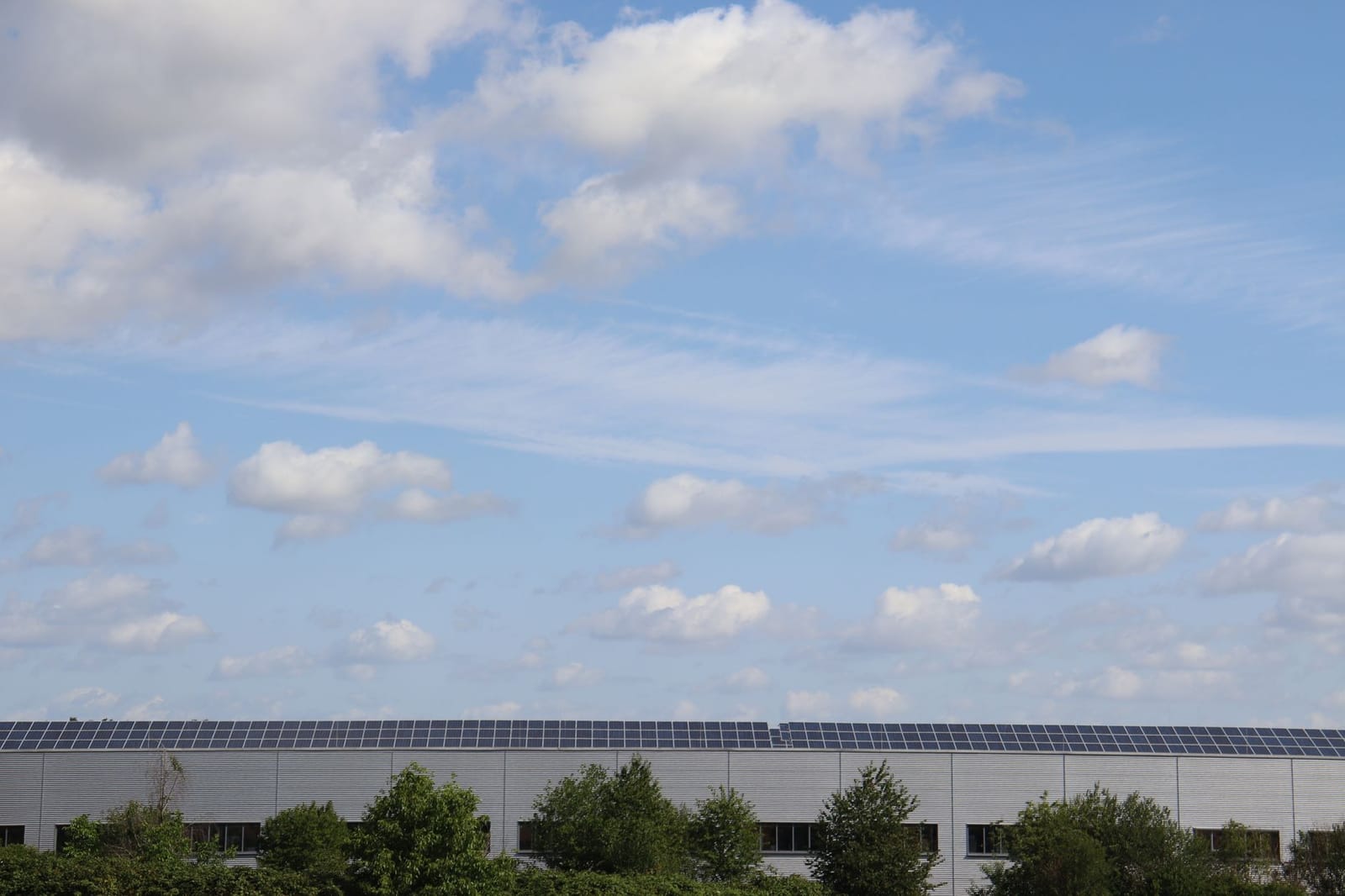
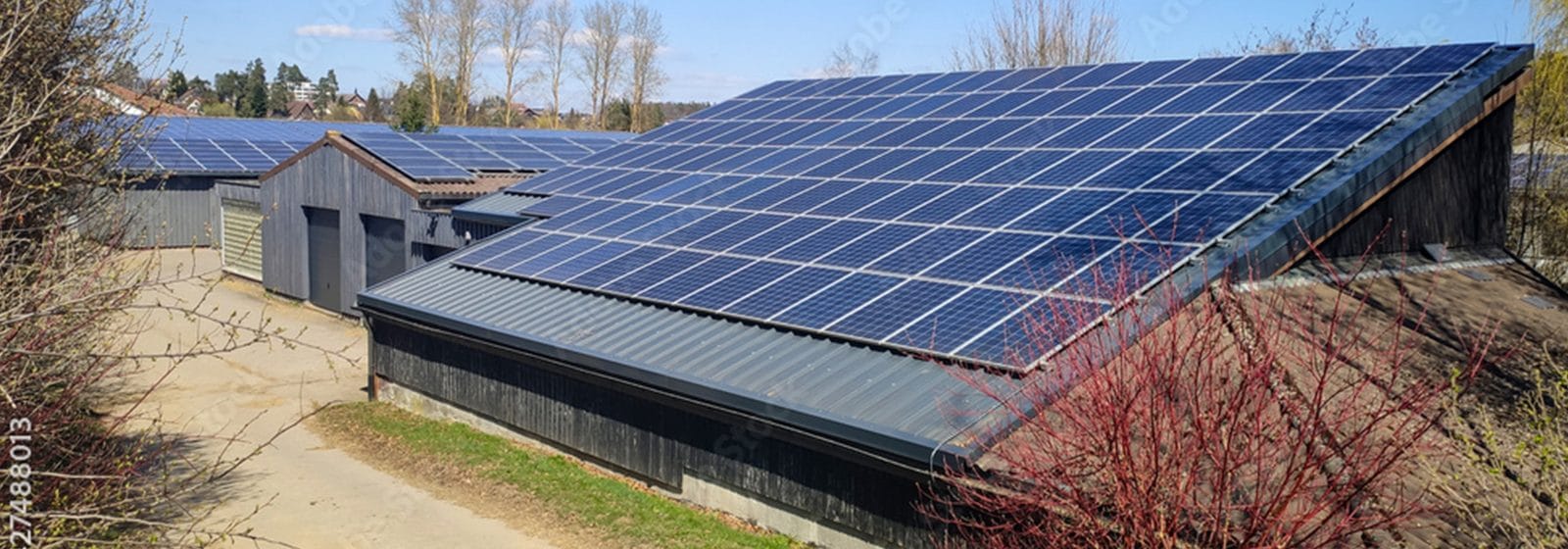
Solar panels for shopping centres turn the one cost an owner controls directly, the landlord-funded common-area electricity, into a falling line on the service charge. A shopping centre or retail park runs a large, predictable common-area load through every daylight hour the scheme is open: mall and car-park lighting, lifts and escalators, ventilation and comfort cooling, and increasingly EV charging. That load peaks in the middle of the day, exactly when a rooftop array generates most, so the power your panels make is consumed on site rather than exported at a lower price. For an asset manager or institutional owner that combination, a controllable cost, a high self-consumption load and a portfolio net-zero obligation, makes a multi-let retail scheme one of the strongest solar assets a fund can own.
Why shopping centres suit solar so well
Three things line up on a retail scheme that rarely line up elsewhere. First, the common-area load is landlord-controlled and highly predictable across the trading week, so an array sized to it self-consumes the great majority of what it generates, and self-consumed kilowatt hours are worth far more than exported ones. Second, the surfaces are enormous: vast single-storey and mall roofs, plus multi-storey and surface car parks that are usually the biggest untapped surface the scheme owns. Third, the owner is under direct pressure on energy and on carbon. Energy is now one of the largest controllable costs sitting inside the service charge, and a service charge that keeps rising is a drag on lettability and on the rents tenants will bear. On-site solar cuts that common-area cost, improves the EPC of the units it serves, and gives the fund an auditable, investor-facing net-zero story rather than a pledge. With the Minimum Energy Efficiency Standard expected to rise to EPC B for commercial property by 2030, and research suggesting a large share of UK retail space falls short today, solar is a way of protecting the value and lettability of the whole asset.
How we size a shopping-centre system
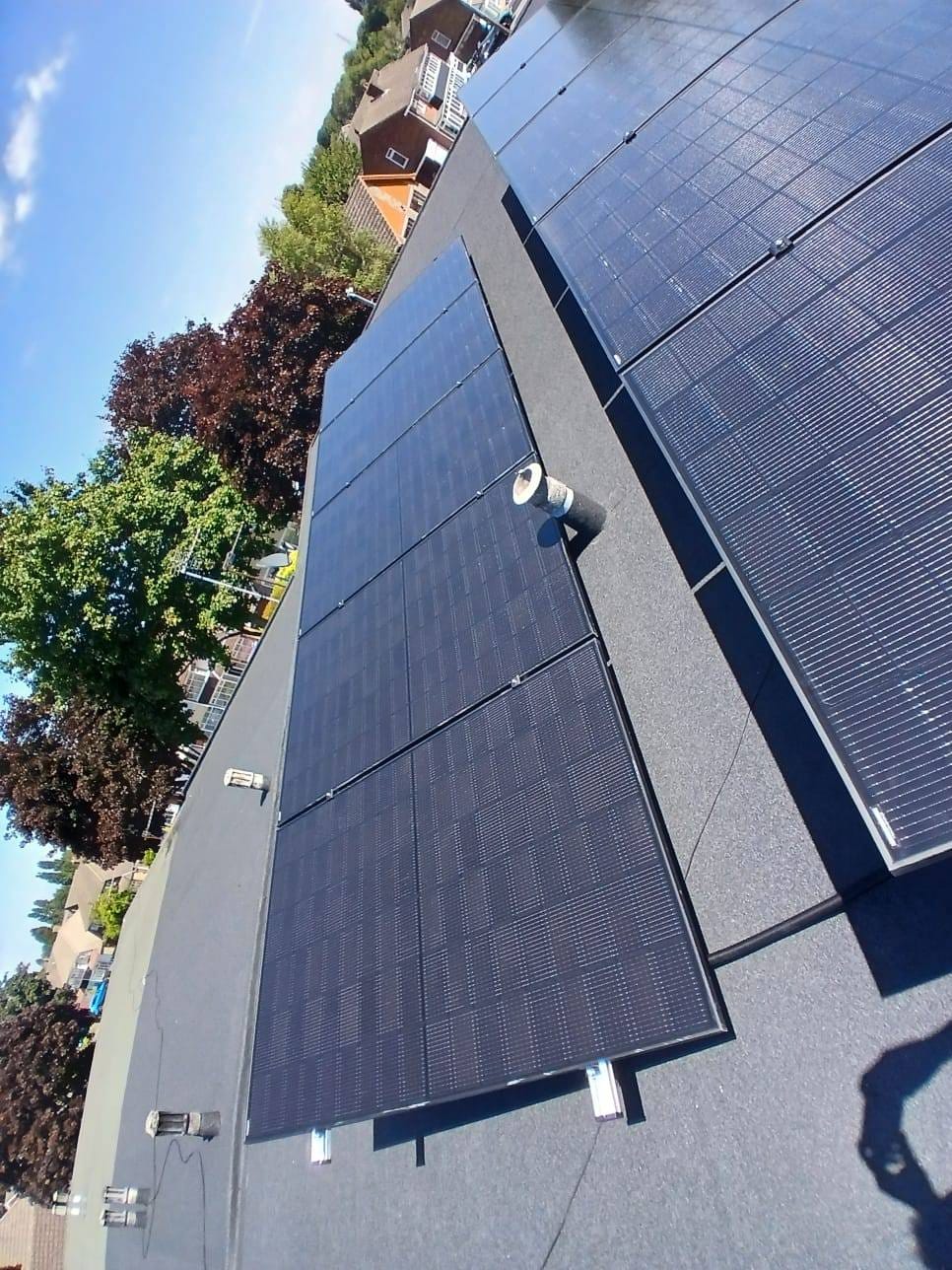
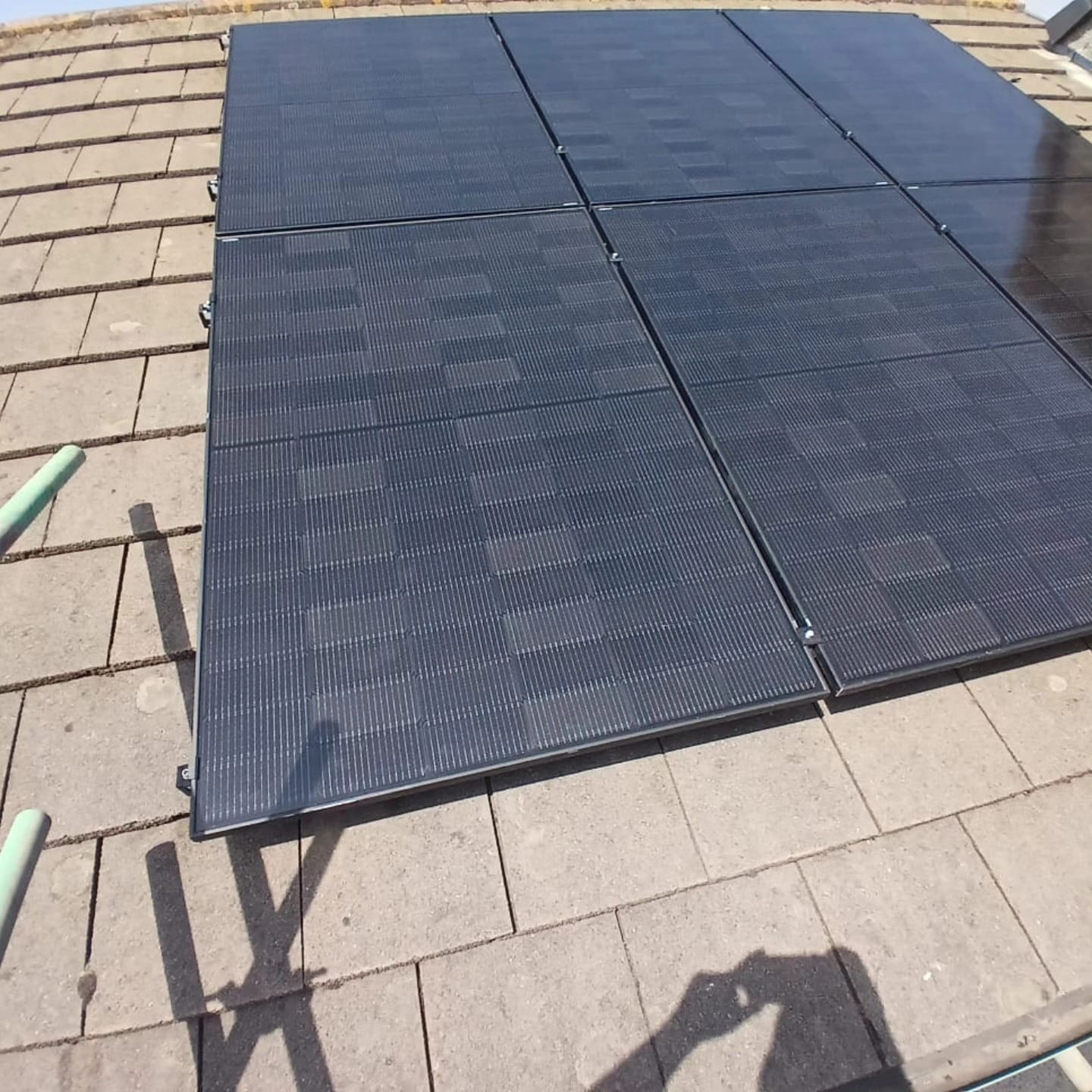
We size from the landlord-controlled common-area load, not from the roof plan, because that demand is what decides the self-consumption you can bank. For a shopping centre or retail park we usually design a system in the 250 to 2,000 kW range, roughly 460 to 3,700 panels across about 1,500 to 12,000 square metres of roof and very often the car park as well. A system that size generates in the region of 230,000 to 1,840,000 kWh a year and saves somewhere between 53 and 423 tonnes of CO2 annually. We pull at least twelve months of half-hourly meter data on the common-area supplies, model the lighting, lifts, escalators, HVAC and car-park draw through the day, then add expected EV-charging growth before we settle on a final size. Where the roof alone cannot host enough capacity, a solar carport over the car park adds generation while giving shoppers shaded, EV-ready parking and a visible sustainability statement at the entrance, and on the largest schemes we phase the rooftop and the carport so the works fit around trading and around the capital plan.
Costs, payback and tax relief
A shopping-centre project typically lands between £180,000 and £1,600,000 depending on roof area, car-park inclusion and the size of the common-area load, with a typical simple payback near 5.5 years and the electricity effectively free for the fifteen to twenty plus years after that. Cost per kW falls as the scheme grows, roughly £750 to £950 per kW above 250 kW and toward £600 per kW above 1 MW, so larger schemes carry the better unit economics. After self-consumption, tax is the financial lever that counts most. As a special-rate plant-and-machinery asset, solar PV lets a landlord offset the first £1m of qualifying expenditure against profit under the 100% Annual Investment Allowance, returning up to a quarter of that spend in year one to a company paying corporation tax. Its special-rate status keeps solar out of full expensing, so we claim the AIA and, for expenditure above the £1m cap, the 50% First-Year Allowance, spreading the spend across both reliefs on a large multi-phase scheme. Our cost guide sets out worked numbers by scheme size and shows how the service-charge benefit can be modelled.
Funding routes for landlords and managing agents
The route that fits a multi-let asset depends on how the owner wants the investment to sit against the service charge. The Plant and Machinery Capital Allowances regime is the foundation for an owner that capitalises the system, with 100% AIA up to £1m and the 50% First-Year Allowance above it. Where the array serves customer or staff EV charging, the Workplace Charging Scheme contributes from 1 April 2026 up to £500 per socket and up to £20,000 per applicant, covering up to 75% of charger cost across as many as 40 sockets, but it closes permanently on 31 March 2027 so the application should go in well before then. Surplus you export is paid through the Smart Export Guarantee, with supplier-set rates typically in the 4 to 15p per kWh range in 2026, though on a well-sized common-area array most generation is self-consumed, which is the more valuable position. Owners that prefer not to use capital can fund the system through a power purchase agreement, paying per kWh below the grid tariff with the array off balance sheet and savings from day one, or through asset finance over seven to fifteen years that is typically cash-positive from year one. The funding routes page sets out each option in full.
Compliance, multi-tenant structuring and green leases
The defining question on a shopping centre is not the panels, it is the split between landlord and tenant. Metering, service-charge recovery and any green-lease clauses need structuring before install so the cost and the saving land in the right place, and we model both tenant-funded and landlord-funded routes so it is clear who pays and who benefits, whether through the service charge or a green-lease rent share. This landlord-tenant structuring is the part of shopping-centre solar most often left unaddressed, and getting it right is what turns a stalled proposal into a scheme that proceeds. On the technical side, rooftop PV on commercial buildings is usually permitted development under Class A Part 14 of the GPDO within size limits, while listed and conservation-area schemes, and any solar carport or ground-mount above the permitted-development thresholds, need planning permission. Larger schemes typically have an existing HV connection, but any export still requires a G99 application and a DNO study, and on a capacity-constrained network that connection can run six to eighteen months, so we submit it early. A roof structural survey is mandatory before loading PV, we work to the SPF1981 v3 rooftop fire-safety standard insurers increasingly require, and where the works pass 30 person-days CDM 2015 applies. MEES EPC B, expected in 2030, is the direct driver for the leased units, and larger owners are likely to be in scope for ESOS Phase 4, whose compliance notification is due by 5 December 2027.
How we approach the project
We start from your half-hourly meter data on the common-area supplies, size for self-consumption against that load including realistic EV-charging growth, and assess the car park alongside the roof as standard because on most schemes it is the larger opportunity. We commission a structural survey and a roof build-up and asbestos check before we put a price on anything, and we submit the G99 grid application early to start the connection clock. You receive a fixed-price proposal that sets out the capital, PPA and finance routes and shows how the benefit flows through the service charge or a green-lease rent share, backed by an insurance-backed workmanship warranty with annual operation and maintenance and 24/7 remote monitoring that alerts us automatically to any underperformance. Where the owner runs more than one scheme, we design a repeatable template and roll it across the portfolio with portfolio pricing, a phased capital plan and a single monitoring dashboard that gives both the facilities team and ESG reporting live generation and lifetime CO2 saved across every site.
An illustrative example
As an illustrative composite based on a typical UK shopping-centre and retail-park project: an institutionally owned scheme with a large clear-span roof over the mall and a surface car park, where rising common-area electricity costs were inflating the service charge and head office had set a portfolio Scope 2 reduction target. The owner installed roughly 650 kW combining rooftop PV with a solar carport, in the region of 1,190 panels, generating about 595,000 kWh a year. With the common-area lighting, lifts, escalators and HVAC running through every trading hour, self-consumption sat near 91%, the carport added customer EV charging bays part-funded under the Workplace Charging Scheme, and the qualifying cost was relieved under the Annual Investment Allowance. The design was then templated for rollout across further schemes in the portfolio. The figures are illustrative and depend on your scheme, common-area load profile and tariff.
If your scheme includes anchor food stores or large leisure boxes, our pages on supermarket and convenience solar and gym and health-club solar cover those tenants in detail. When you are ready, read the cost guide and the funding routes, request a free feasibility from your meter data, or start with the solar FAQs.